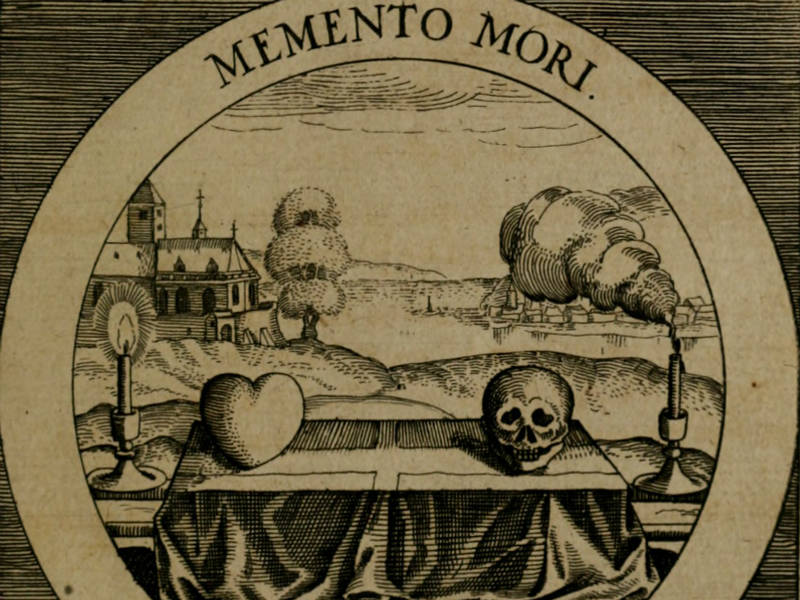
I am very much an amateur when it comes to the practices of Stoicism. I have read and re-read Meditations and dabbled in a few other titles from men like Seneca and articles from The Daily Stoic. One of the major tenants of Stoicism that has really resonated with me is the concept of Memento Mori.
Memento Mori translates literally to “remember (your) death.” It’s not meant to be a morbid practice of focusing on death, nor is it telling you to get a tattoo of the grim reaper on your back. It is meant to be a reminder that inevitably you will die. What’s more, that your death is unpredictable and could happen while you sleep tonight, or could happen 50 years from now.
While part of Memento Mori urges you to live for today, it’s not saying that you should just yolo your way through life. In fact a major tenant of Stoicism is to be prepared for whatever life may throw your way. Memento Mori is a reminder that whether you are a king or a pauper, you will still wind up in the same place, and that you shouldn’t fear death but prepare for it each day.
I don’t want to get too tied up in Stoicism, but learning about the concept of Memento Mori came at a time where I am dealing with death in a few stages.
Death in many forms
First is a death in the distant past. My mother in law lost her mother to cancer almost 20 years ago, but still relives it as if it were yesterday. You can’t have a conversation with her without her blaming something on losing her mother unexpectedly to cancer. It’s a sad and tragic tale to hear. Except that it happened two decades ago when my mother in law was in her 40’s, and she was somehow unprepared to lose a parent at an age where people generally start to experience just such an event. Her father, siblings and children all accepted the loss after a term of mourning and moved on. Unfortunately my mother in law never expected to lose her mother when she needed help raising four young children, and seems to resent her mother’s death (not her mother of course) for leaving her in the lurch. Sadly, rather than learn from the experience, my mother in law seems just as unprepared for her 91 year old father to pass.
Next is a death in the recent past. Five years ago my grandmother, my last remaining grandparent, died at 93 years old. Technically it was pancreatic cancer that ended her life, but she was diagnosed only days before her death. In the years leading up to her death she went from forgetfulness, to an almost comical dementia, to dangerous dementia where she once drove to the store and couldn’t find her way home for three hours. My grandmother didn’t have any cause to prepare for death. In some ways I think she had been prepared for years, if not decades. She’d sold anything of value that she owned in her 80’s, her home had been long paid off, and she had no debts or other obligations.
My parents, on the other hand, were completely unprepared to have to care for her even after they had to take away her keys years prior to her death. My grandmother lived alone hundreds of miles from my parents. Neither party had any interest in living together, but neither had any money set aside for long term care. Both my parents and my grandmother were “saved” from potential financial disaster by the cancer. Still setting a terrible example, my parents got tired of waiting for my grandmother to die and left her in the hospital to die alone so they could go back to golfing five days a week.
Currently, I live next door to two wonderful elderly people who have served as better grandparents to my kids than their own family. Sadly, my neighbors are reaching the end of their lives and both are fairly sickly. The man has nearly died of cancer multiple times. The woman had a stroke in the past and is in multiple medications for various ailments. Our greatest fear for them has been an accident in the home that is much too large for them, or the woman passing before her husband, who is more or less helpless without her.
This past weekend everyone got an eye opener when she couldn’t breathe and had to be rushed to the hospital. We all quickly learned that the man is so disassociated from their day to day lives that he knows nothing about his own doctors, her medications, who to pay for an oil delivery, etc. This event exposed how woefully unprepared they are should one of them be incapacitated or die. Even their children were unprepared to have to travel here to help their parents. The one thing they did do to prepare was to cultivate great relationships with the neighbors on each side of their house and I’m very happy we were able to assist them. However, we now know it’s time for them to face some uncomfortable truths.
Lessons learned
A long time ago I was introduced to the concept of a “house book.” This could be a book or a file that people know how to access and contains your important information. Mine is in a drawer in my kitchen desk and contains things like our insurance companies, the names of the banks and brokerages where our money resides, the contact information for the services companies we work with, our mortgage company, the due dates of major bills, etc. There is no specific information like account numbers or passwords, just a general guide to how our lives operate should anyone need it. This takes maybe 30 minutes to complete and should you ever need it, it could be the best 30 minutes you ever spend.
This past weekend, when doctors needed to know my neighbor’s medications at 2 AM I learned that my house book should contain medication information for easy reference. My wife and the man next door had to tear through cabinets and drawers and receipts to find the names of the five medications this woman was taking. That time spent could have been life and death for her.
Prepare for the likely possibility that you or your spouse may one day be unable to answer simple, but potentially important questions.
If you have a parent or loved one who is old or sickly, it’s a good idea to prepare as best you can for the inevitable phone call that they need care or have passed. For instance, if your father is a 76 year old lifelong heavy smoker who gets bronchitis or pneumonia every time he gets a cold, it’s a good idea to bank some extra vacation time and keep enough money to cover emergency flights in your bank account. Not to get too specific, of course.
Know your level of involvement in your parent’s care and prepare for an inconvenient and potentially heartbreaking call when they eventually come to the end.
Finally, prepare yourself. We are the only species we know of that are aware of our own mortality. Yet almost all of us do our best to ignore it every day. We put off writing a will because of a silly superstition that it will make us die. We don’t do estate planning because it costs too much. We pretend our family members know enough about us to jump in and help with our lives should an emergency arrive, when they have too much going on in their own lives, and know so little about us they can’t even buy us the right gift card around the holidays.
Do the work and make sure you and your loved ones are covered in the event of unexpected death. Get term life insurance. Set beneficiaries on your accounts. Write your information down and make sure someone knows where to find it. Have uncomfortable conversations with your elderly relatives if you’re expected to be involved in their affairs.
Death is a difficult thing for any of us to deal with, but it doesn’t need to find you unprepared. Put in a little effort now and you and your loved ones will be grateful later.
 Freed by 50